
How to Dress Sliding Doors for a Beautiful Home
- kath5152
- 6 hours ago
- 6 min read
A sliding door can be the most beautiful source of light in a room, framing a terrace, garden or sea view. Yet it can also feel exposed, echo slightly at night, or leave a space looking unfinished. Knowing how to dress sliding doors is about more than covering glass. It is about bringing softness, privacy and a sense of considered comfort to the way you live.
For homes in Estepona, Malaga and the surrounding coast, the right treatment must work particularly hard. It should temper bright Mediterranean sunlight, preserve the view when desired and sit beautifully alongside the relaxed elegance of the interior.
Start with how the doors are used
Before choosing a fabric or fitting, consider the daily rhythm of the doors. Are they opened constantly to reach a terrace? Do they lead from a bedroom to a balcony? Are they a wide expanse of glass in a living area where entertaining and daylight matter most?
This is the detail that separates an attractive idea from a treatment that genuinely works. A pair of curtains that is too narrow can make it awkward to access the doors. A blind fitted where handles project may not sit neatly. Equally, a treatment chosen only for practicality can leave a large wall of glass looking stark.
Think, too, about what happens at different times of day. Morning glare, afternoon heat, neighbouring properties and evening privacy will all influence the balance between light control and openness. In many homes, layering is the most elegant answer.
Curtains bring softness and presence
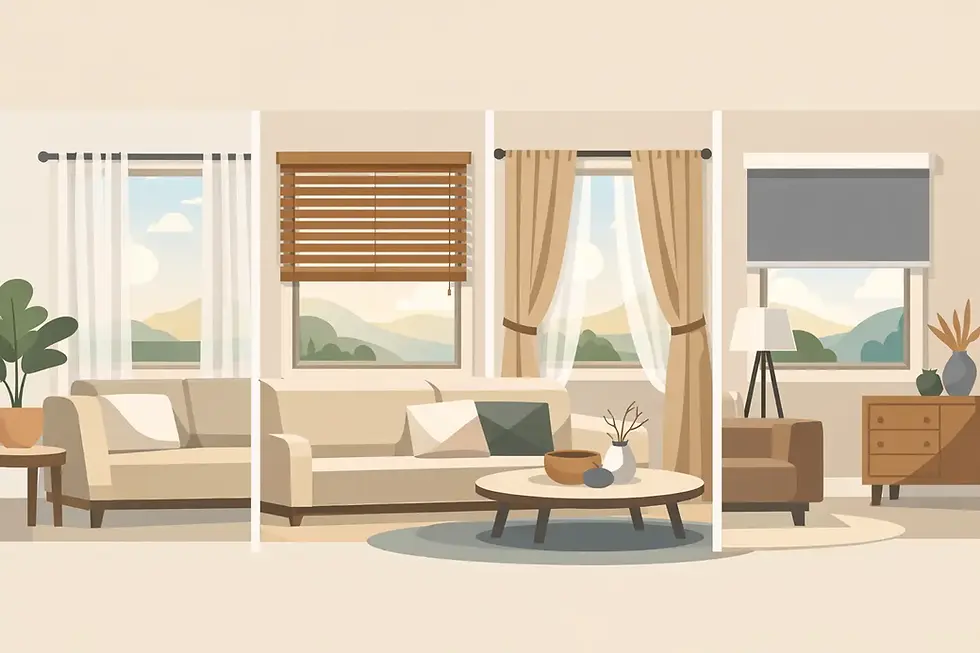
Full-length curtains are a classic way to dress sliding doors, particularly in larger rooms or spaces that need warmth. Hung beyond the door frame, they allow the fabric to stack clear of the glass when open, leaving the doorway practical and the view unobstructed.
The key is proportion. Curtains should generally be made with sufficient fullness so they retain a graceful appearance when drawn, rather than becoming a flat panel across the glass. Their track or pole should extend beyond both sides of the doors where wall space allows. This gives the fabric somewhere to rest when the doors are in use.
For a contemporary villa or a light-filled coastal home, linen-look fabrics and softly textured weaves offer an easy, refined finish. They filter the strong light beautifully without feeling formal. In a more traditional interior, a heavier drape can add richness, improve the sense of cosiness and offer better night-time privacy.
Choose the heading style carefully
A discreet ceiling-fixed track is often the most polished option for sliding doors. It makes the room feel taller and lets the curtains fall in an uninterrupted line from ceiling to floor. This is especially effective where the doors are wide or sit beneath a low ceiling.
A decorative pole can be lovely where it complements other metal finishes in the room, although it needs enough clearance for curtains to move freely. Wave heading is a popular choice for modern interiors because it creates calm, even folds. Pencil pleat and pinch pleat styles provide more traditional detail, but must be planned carefully around the space needed for the doors to slide.
Sheer voiles preserve the light
If the view is one of the reasons you chose your home, it is understandable not to want to hide it behind heavy fabric. Voiles offer a beautiful middle ground. They soften the intensity of daylight, reduce the feeling of being overlooked and add movement to a room without closing it in.
A voile can be fitted alone for a relaxed, airy scheme, particularly where privacy is needed during the day but blackout is not. It is also ideal as the first layer beneath curtains. During daylight hours, the voile can remain closed while the main curtains are stacked back, creating a gentle veil between the room and the outdoors.
White and warm ivory remain timeless choices, but softer natural shades such as sand, stone and pale taupe can be especially flattering in homes with terracotta floors, timber furniture or warm neutral walls. The fabric should be judged in the room itself, as the strong local sun can change how a colour appears considerably.
Blinds are useful when space is limited
Blinds can be a smart choice for sliding doors when there is limited space at either side for curtain stacking, or when a clean architectural look is preferred. Vertical blinds have come a long way from their purely practical reputation and can offer excellent control over sun and privacy when selected in a contemporary fabric and carefully fitted.
Panel blinds are another natural partner for wide glazed doors. Their broad fabric panels slide across on a track, mirroring the horizontal movement of the doors themselves. They can look particularly striking in minimal interiors and are well suited to large, uninterrupted stretches of glass.
Roller blinds provide a neat, compact solution, especially when fitted within the recess or above individual door panels. However, they are not always the best answer for doors used frequently. If the blind must be raised every time someone steps outside, it may become less convenient than curtains that simply draw to one side.
Roman blinds can bring texture and a tailored look, but are generally better suited to fixed windows beside sliding doors than the doors themselves. When raised, the fabric stack can partly cover the top of the glass, so measurements and handle positions deserve careful consideration.
Layering creates a more luxurious result
For many homes, the most successful approach is not choosing between curtains and blinds, but combining treatments with distinct roles. A sheer voile handles daytime privacy and softens glare. Lined curtains add insulation, darkness and a more enveloping atmosphere in the evening. A blind may provide targeted light control where the sun is particularly strong.
This layered approach is particularly valuable in south-facing rooms. It allows you to adapt the space through the day without sacrificing the elegance of the window. It also gives a generous, finished appearance that suits large patio doors, where a single treatment can sometimes feel visually slight.
There is a practical consideration here: layers need enough depth. Tracks, poles and blinds must be positioned so fabrics move independently and do not catch on handles or each other. This is where an in-home assessment makes a visible difference to the final result.
Consider lining, privacy and temperature
Sliding doors can be a significant source of heat gain in summer and heat loss on cooler winter evenings. Curtains will not replace quality glazing, but a well-chosen lining can improve comfort and make the room feel less exposed after dark.
For bedrooms, blackout lining is often worthwhile, particularly where early morning light enters directly through terrace doors. In living rooms, a dim-out or standard lining may be sufficient, preserving softness while still offering privacy. Interlining adds body and insulation, although it creates a fuller, more traditional drape and may not suit every contemporary scheme.
Do not overlook the view from outside at night. When interior lights are on, sheer fabric alone offers little privacy. If the doors face a neighbouring terrace, road or communal area, a second layer that closes fully is usually essential.
Measure for movement, not only glass
The most common mistake with sliding-door curtains is measuring the glass rather than the whole treatment area. The fabric needs room to clear the doorway, and the track needs to account for the direction in which the panels open. Door handles, air-conditioning units, radiators and nearby furniture can all affect the placement.
Floor length matters as well. Curtains that hover noticeably above the floor can look accidental, while fabric that pools heavily may be impractical near a frequently used terrace entrance. A precise, near-floor finish is usually the most versatile choice: elegant enough for a formal lounge, practical enough for everyday life.
Made-to-measure treatments are particularly valuable on the Costa del Sol, where door sizes, ceiling heights and architectural details vary greatly from one property to the next. A professional fitting ensures the track is level, the stack-back is planned and every panel moves as it should.
How to dress sliding doors in each room
In a living room, prioritise softness and flexibility. Voiles with lined curtains create a welcoming frame for the view and make the room more comfortable when evening falls. Choose fabrics that connect with upholstery, rugs or cushions rather than matching everything exactly.
In a bedroom, privacy and sleep quality tend to lead the decision. Blackout-lined curtains with a sheer layer offer the greatest control, while a ceiling track can make a modest room feel more generous. For a dining area, a light-filtering voile or panel blind may be enough during the day, with curtains adding occasion and warmth.
For a kitchen or informal sitting area, durability and ease of use matter. Keep fabric away from splash zones, ensure doors can be opened without fuss and select a treatment that suits the pace of the room rather than fighting it.
A beautifully dressed sliding door should feel effortless: light when you want light, privacy when you need it and fabric that belongs to the room rather than merely covering the glass. At Boutique Curtains, this begins by seeing the doors in their true setting, so every detail can be tailored to the way your home looks and lives.


Comments