
A Practical Guide to Motorised Curtain Systems
A beautiful curtain should do more than frame a view. It should move with ease, sit perfectly when open, and bring privacy or shade at the touch of a button. This guide to motorised curtain systems is designed for homeowners who want that added sense of comfort and considered luxury, without compromising the soft, tailored character of made-to-measure window dressings.
Motorised curtains are particularly appealing in the bright, sun-filled homes of Estepona, Malaga and the surrounding coast. They make it simple to soften strong afternoon light, close larger glazed doors in the evening, or prepare a second home before you arrive. More importantly, when specified well, the technology remains discreet. What you notice is the calm movement of beautifully fitted curtains, not the mechanism behind them.
What is a motorised curtain system?
A motorised curtain system uses an electric track and motor to open and close curtains. Instead of drawing the fabric by hand, you can use a wall switch, remote control, app, timer or selected smart-home controls. The motor sits discreetly at one end of the track, while specially designed gliders carry the curtain heading evenly across the window.
The principle is straightforward, but the final result depends on careful planning. A motorised system must be matched to the curtain weight, the width of the opening, the chosen heading and the fixing surface. A light voile across a bedroom window needs a very different specification from lined, interlined curtains running across a wide living-room terrace door.
For this reason, motorisation is best considered at the same time as the curtains themselves, rather than added as an afterthought. It allows the track, fabric and fitting to work together from the beginning.
Why choose motorised curtains?
Convenience is the immediate attraction. At night, a single control can close curtains across several doors. In the morning, they can open gradually without handling the fabric. For tall windows, high ceilings and difficult-to-reach areas, motorisation is also a practical solution rather than simply a decorative indulgence.
There is an aesthetic advantage too. Repeated hand-pulling can disturb carefully dressed folds over time, particularly with delicate voiles or full, generously gathered curtains. A quality motorised track guides the fabric in a consistent motion, helping the curtains retain their intended drape and finish.
For homes that are used seasonally, timers can add reassurance. Curtains can be set to open and close at chosen times, creating a more lived-in appearance while you are away. They can also help manage heat and glare, although curtains should be part of a wider approach that may include blinds, shutters or solar-control glazing where required.
Motorisation is not essential for every window. A small pair of curtains in a guest room may be just as pleasing on a hand-drawn track. The value is most apparent where the curtains are large, heavy, frequently used or positioned over doors and expansive glazing.
Choosing the right power option
Mains-powered systems
A mains-powered motor is usually the preferred choice for larger or regularly used curtains. It provides reliable everyday operation and is well suited to heavy fabrics, long tracks and multiple-window schemes. The cable and power point can often be planned discreetly during a renovation, new build or redecoration project.
This option involves more preparation, particularly if electrical work is needed. Yet for a principal living space or master bedroom, the neatness and reliability often justify the planning. An experienced installer will assess where the motor can sit, how the cable can be concealed and whether the chosen fixing area is suitable.
Battery-powered systems
Battery motors are useful where introducing a power supply would be disruptive or impractical. They offer a clean solution for completed interiors, holiday homes and individual windows, without visible trailing wires. Depending on use, batteries require periodic recharging, so access to the motor should be considered from the outset.
Battery power is not automatically the right choice for every setting. Very wide, heavy curtains and frequently operated systems may be better served by mains power. A consultation should make this clear before fabrics and tracks are finalised.
Smart controls and automation
The most useful smart features are often the simplest. A remote by the bedside, a wall switch near the door, or a schedule that closes curtains around sunset can make a noticeable difference to daily comfort. App control is helpful for owners who spend time away from their property, while voice control may suit an established smart-home set-up.
Compatibility varies between manufacturers. If you already use home automation, mention it early. The right system can be selected to suit your preferred controls, rather than trying to force a beautiful curtain installation around unsuitable technology later.
The track matters as much as the motor
Motorised curtains require a purpose-made track. Decorative poles can be striking in the right room, but motorisation is generally most refined when the track is discreetly fitted to the ceiling or positioned beneath a pelmet or recess. This creates a clean, architectural line and allows the fabric to take centre stage.
Ceiling-mounted tracks are particularly effective over sliding or folding doors. They can make the room feel taller, let curtains stack neatly beyond the glass where space allows, and reduce light gaps at the top. In homes with uneven ceilings, deep coving or limited wall space, the fitting method needs careful assessment before anything is ordered.
Curtain stacking is a detail worth discussing. When open, fabric gathers at one or both sides of the window. On a large expanse of glass, that stack can be substantial. If preserving the view is important, the track may need to extend beyond the window opening so that the curtains clear as much glass as possible.
Fabric, heading and weight
The fabric you choose still defines the look and feel of the room. Linen blends bring relaxed texture, while richer woven fabrics, velvets and interlined curtains create warmth, depth and a more formal finish. Motorisation works beautifully with each, provided the motor is specified for the total weight.
Wave headings are especially popular on motorised tracks because they create even, contemporary folds that travel smoothly. Pencil pleat and pinch pleat styles can also be used, offering a softer traditional or more tailored appearance. The choice should reflect the architecture of the home, the scale of the room and how much fullness you would like at the window.
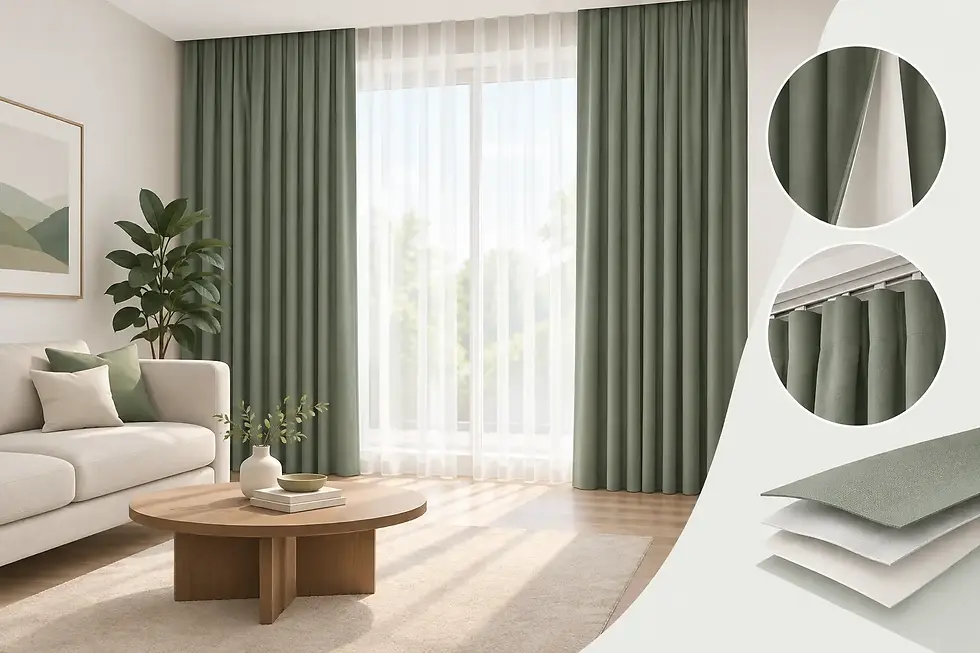
A sheer voile on its own can be motorised for daytime privacy and gentle light diffusion. Alternatively, a double-track arrangement can combine a voile with a heavier curtain. This is an elegant option for south-facing rooms: the voile softens the daylight, while the main curtains provide privacy and a more cocooning evening atmosphere.
Details to plan before installation
A polished result begins with accurate measuring. Motorised tracks need enough room for the motor, curtain return and brackets, as well as a suitable route for power where applicable. The structure above the window must also support the combined weight of track, motor and fabric.
Consider how the curtains will open. A centre-opening arrangement creates symmetry over French doors or a large picture window. A one-way draw can be preferable where furniture, a door handle or a wall limits the space on one side. The direction of travel affects both the visual balance and the practical clearance around the window.
Noise is another reasonable question. Quality systems are designed to operate quietly, but no motor is entirely silent. In bedrooms and calm living spaces, choosing a premium, correctly specified motor makes a real difference. It is also sensible to check the controls during installation, ensuring the open and closed positions are properly set and the curtains sit as intended.
A more considered way to specify motorised curtains
The best motorised curtain systems never feel overly technical. They feel considered. The track is almost invisible, the curtains hang with confidence, and the controls become part of the natural rhythm of the home.
At Boutique Curtains, an in-home consultation allows us to see the light, proportions, existing furnishings and practical requirements first-hand. We can then advise on fabric, heading, track placement and control options as one complete design, rather than treating each decision in isolation.
Whether you are dressing a coastal flat, updating a family home or finishing a newly renovated property, motorisation should support the way you live. Choose it where it adds ease, protects the elegance of the fabric and makes your wonderful windows even more enjoyable to use.


Comments