
Best Curtain Linings Explained for Beautiful Homes
A beautiful curtain fabric can set the mood of a room, but its lining often determines how well it performs day after day. Best curtain linings explained simply: the right choice can improve privacy, soften sunlight, protect precious fabrics and give made-to-measure curtains their graceful, substantial drape.
For homes in Estepona, Malaga and along the coast, lining deserves particular consideration. Bright Mediterranean light is wonderful, yet it can fade furnishings, raise room temperatures and make an otherwise peaceful bedroom feel far too exposed. The ideal solution depends on your room, the direction of the window, the fabric you love and how you want the space to feel.
Best curtain linings explained: what a lining does
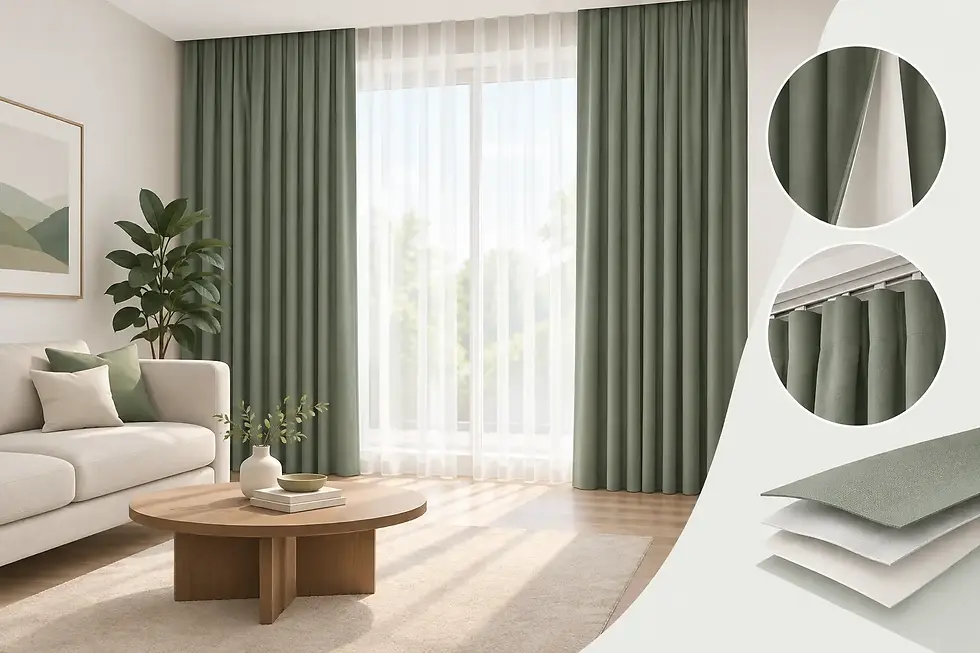
A curtain lining is the fabric fitted to the back of the face fabric, usually facing the window. It is not simply an unseen extra. It changes the way curtains hang, how opaque they appear, how they respond to light and how long the main fabric retains its colour and quality.
A good lining gives lightweight fabrics more body, helping pleats fall in neat, elegant folds rather than looking flat or flimsy. It also forms a protective barrier between the decorative fabric and direct sunlight. This is especially valuable for silks, linens, richly coloured weaves and natural fibres, all of which can be more susceptible to fading over time.
Lining can also support comfort. It may reduce glare, offer a degree of insulation and make a room feel more private once the curtains are closed. However, no one lining is perfect for every setting. A formal sitting room with soft northern light has different needs from a west-facing bedroom overlooking the sea.
Standard lining for polished everyday curtains
Standard lining is a versatile choice for living rooms, dining rooms and guest bedrooms where you want the curtain fabric to look refined without creating complete darkness. Usually made from cotton or a cotton-rich blend, it gives curtains a clean finish, additional weight and a more luxurious fall.
This option is particularly effective behind medium-weight fabrics such as printed cottons, textured weaves and many linens. It gently filters light when curtains are drawn, rather than fully blocking it, which preserves a warm and inviting atmosphere during the day.
For clients selecting curtains primarily for decorative impact, standard lining is often the natural starting point. It protects the fabric and improves the finished appearance while allowing the chosen material to remain the focal point. In very sunny rooms, though, it may not be enough on its own to manage glare or heat.
When standard lining works best
Choose standard lining when privacy, improved drape and fabric protection matter more than room-darkening. It suits spaces where you entertain, relax or enjoy daylight, and it pairs beautifully with voiles that can remain closed for daytime privacy.
Blackout lining for bedrooms and media rooms
Blackout lining is designed to significantly reduce the light passing through a curtain. It is a practical and elegant answer for bedrooms, nurseries and television rooms, particularly where early morning sun, street lighting or nearby properties interrupt rest.
The quality of blackout can vary. A properly made lining will provide substantial light control without making the curtain feel stiff or overly synthetic. There may still be a fine line of light around the sides, top or bottom of the window, as this depends on the heading, track or pole placement and the fit of the curtains. For the darkest possible result, fitting and window coverage are every bit as important as the lining itself.
Blackout lining can be an excellent choice in a sunny south- or west-facing bedroom on the Costa del Sol. It supports more restful sleep and helps protect the room from intense afternoon glare. It also adds privacy in homes that are overlooked, whether you live here permanently or use the property as a holiday home.
There is a trade-off: blackout lining makes curtains denser and can alter the look of very delicate fabrics. It is worth choosing the face fabric and heading carefully so the finished treatment retains its softness and elegance.
Thermal lining for greater comfort
Thermal lining is made to help moderate heat transfer at the window. In cooler months, it can reduce the feeling of heat escaping through glass. During warmer periods, it can help lessen the impact of direct sun when curtains are closed.
It should not be seen as a substitute for quality glazing, shutters or sensible solar control, especially in rooms with large expanses of glass. Yet it is a worthwhile layer of comfort, particularly in older homes, properties with cooler north-facing rooms or bedrooms that become chilly in winter.
Many homeowners assume thermal lining is only useful in cold climates. In southern Spain, it can be equally relevant because windows are exposed to strong sunshine for much of the year. Closing lined curtains through the hottest part of the day can make a noticeable difference to the atmosphere of the room, while also reducing strain on cooling systems.
Thermal linings are available in different weights. A lighter option may be suitable for an everyday sitting room, while a denser lining can be valuable in a bedroom or a room used less frequently. The best choice is led by how the room behaves across the seasons, not by a label alone.
Interlining for a more luxurious drape
Interlining is an additional soft layer placed between the face fabric and the lining. It is a hallmark of traditionally made, more sumptuous curtains, bringing depth, softness and a particularly beautiful drape.
This choice works wonderfully with silks, lightweight wool, linen blends and fabrics that need a little more support. It can make curtains feel fuller and more tailored, creating the generous folds associated with classic, elegant interiors. Interlined curtains also offer extra insulation and can soften external noise to a modest degree.
The result is undeniably luxurious, but interlining is not automatically the right answer everywhere. It adds weight and bulk, so the chosen track, pole and fittings must be able to support it correctly. In a very contemporary scheme with crisp, minimal curtains, a lighter construction may look more appropriate. It is also less suited to certain tightly structured or very thick face fabrics, where the finished treatment could become unnecessarily heavy.
For a formal lounge, principal bedroom or home with tall windows, interlining can be transformative. It gives fabric a presence that off-the-shelf curtains rarely achieve.
Choosing lining by room and window direction
The most successful curtain choices begin with the room rather than the fabric sample. A bedroom needs darkness and privacy; a living room may need filtered light without losing its connection to the view; a dining room may benefit most from fabric protection and graceful drape.
Window direction is equally useful. South- and west-facing windows receive the strongest sun, so blackout or thermal lining can be especially valuable there. East-facing bedrooms may need blackout lining to manage early sunshine. North-facing rooms generally benefit from a lining that adds warmth and body, without necessarily requiring maximum light control.
Consider how you use the space, too. If curtains are mostly decorative and remain open throughout the day, preserving the face fabric from sun exposure becomes a priority. If they are closed every evening, privacy and insulation may carry more weight. For rooms that need daylight and discretion, a layered combination of sheer voiles and lined curtains offers remarkable flexibility.
The fabric still matters
A lining should complement, not fight, the curtain fabric. Pale or loosely woven materials may need lining to prevent the window showing through and to give them a more composed appearance. Dark fabrics can look richer with the right backing, although they may also absorb more warmth in direct sun.
Natural fabrics deserve thoughtful treatment. Linen has a relaxed, tactile quality, but can benefit greatly from lining to improve its fall and reduce sun stress. Silk is exquisite yet sensitive, making a protective lining highly advisable. Heavier velvets may already have substantial body, but a lining can still enhance insulation and create a more finished reverse side.
This is where viewing fabrics in your own home is invaluable. Light changes throughout the day, and a fabric that feels perfect in a showroom can look entirely different beside your flooring, wall colour and existing furnishings.
Why professional measuring makes the difference
Even the finest lining cannot compensate for curtains that are too narrow, too short or fitted at the wrong height. Proper fullness, a carefully selected heading and accurate positioning all affect privacy, light control and the finished silhouette.
Made-to-measure curtains allow the lining, fabric, heading and hardware to be considered as one design. During an in-home consultation, it is possible to assess the path of the sun, the level of overlooking, the practical use of the room and the character of the interior before recommending the most appropriate construction.
At Boutique Curtains, this personal approach ensures each treatment is designed for the home it will live in, from first fabric selection to expert final fitting.
The most beautiful choice is rarely the most technical one. It is the lining that quietly supports the way you live, allowing your curtains to look elegant in the afternoon sun, feel private in the evening and hang beautifully for years to come.


Comments