
Soft Furnishings for Coastal Homes That Last
A coastal home in Estepona or along the Costa del Sol has a particular kind of light: bright, warm and beautifully changeable from morning to evening. It asks more of its interiors than a home further inland. The right soft furnishings for coastal homes should soften that light, feel relaxed rather than themed, and stand up gracefully to sunshine, salt air and the easy rhythm of life near the sea.
The most successful rooms do not rely on obvious nautical motifs or a procession of blue-and-white stripes. They feel considered, calm and personal. Their curtains, cushions, upholstery and throws bring texture, comfort and a sense of quiet luxury, while allowing the setting outside to remain part of the picture.
Choosing soft furnishings for coastal homes
Start with the mood you want the room to hold. A sea-view sitting room may need gentle diffusion and a little privacy without blocking the horizon. A bedroom may call for more softness and shade, particularly where early sun arrives strongly. In a second home, easy care may matter just as much as appearance, especially if the property is closed for periods or enjoyed by visiting family and friends.
Coastal style works best when it takes its lead from the landscape rather than attempting to copy it. Think chalk, sand, putty, warm white, faded olive and soft mineral blue. These shades sit naturally beside terracotta, pale stone, timber and the clear Mediterranean sky. They also have longevity. A room based on neutral layers can evolve easily as artwork, furniture or seasonal accents change.
Colour is only one part of the decision. Texture gives a coastal interior its warmth. A room with plain painted walls and tiled floors can feel overly hard or echoing without fabric to absorb sound and add visual depth. Linen-look weaves, washed cottons, wool blends and softly textured embroideries provide relief from those hard surfaces without making a space feel heavy.
Let light dictate the window dressing
Windows are often the defining feature of a coastal home, so window treatments deserve more than an afterthought. Full-length curtains bring proportion and softness to larger doors and glazed openings, while voiles offer an elegant answer where privacy is needed but daylight must remain generous.
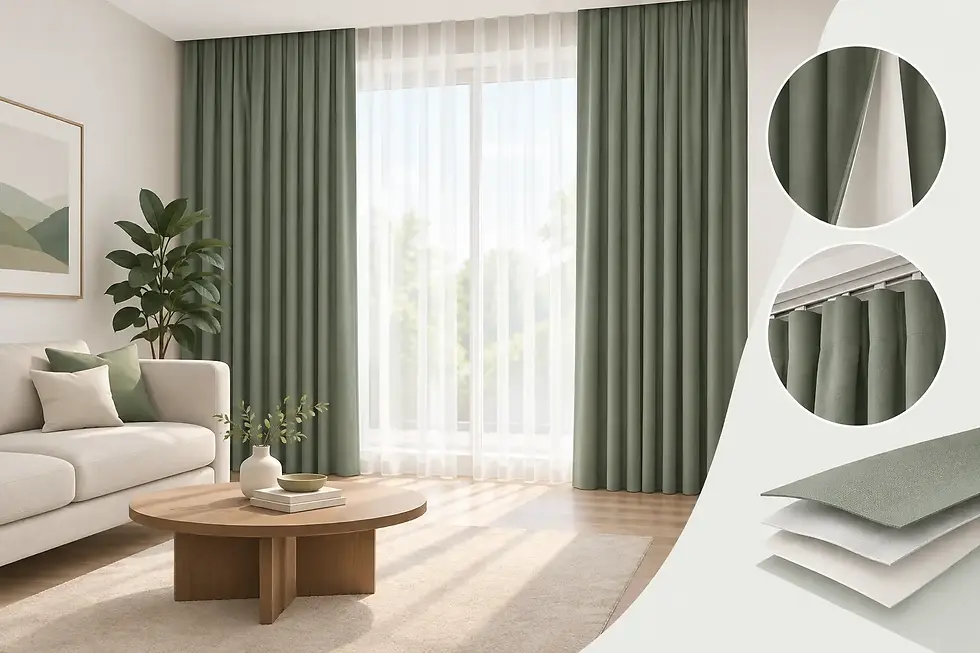
A sheer voile in ivory, stone or soft white can filter glare and temper the view without closing a room in. It is particularly effective in living spaces that face neighbouring properties, terraces or communal areas. For greater flexibility, combine a voile with lined curtains on a double track. The voile can remain drawn during the day, while the main curtains offer evening privacy and a more cocooning feel after sunset.
Fabric weight should suit the room. Heavy drapery can look splendid in a high-ceilinged villa or a formal reception room, but it may overwhelm a compact flat with modest windows. Conversely, a very lightweight fabric in a large, draughty room may not hang with enough presence. Made-to-measure curtains allow the heading, fullness, lining and length to be selected for the specific window, rather than asking a ready-made option to do a job it was never designed for.
Choose fabrics with sunshine and sea air in mind
Mediterranean sunlight is wonderful, but it is unforgiving. Fabrics exposed to direct rays can fade, particularly in rich indigo, coral, charcoal and some vivid botanical tones. This does not mean that colour should be avoided. It simply means that fabric placement, lining and expected use should be considered together.
For windows receiving strong afternoon sun, a quality lining can protect the face fabric and improve the drape of the curtain. In bedrooms, a blackout or dimout lining can make sleep more comfortable without demanding a dark, heavy-looking curtain fabric. A lighter-coloured curtain with a suitable lining often gives a more refined result than choosing a dense fabric simply for its practical qualities.
Natural fibres have an irresistible character in coastal interiors. Linen has a relaxed, softly irregular weave that suits the setting beautifully, while cotton can feel crisp, fresh and approachable. Both may crease and move more freely than synthetic textiles, which is part of their charm, but they benefit from careful selection and professional making. Blends can be an excellent compromise, retaining a natural appearance while offering improved stability and easier care.
For cushions, consider a mix rather than matching every cover. Pair a plain woven linen-look base with a small-scale pattern, a subtle stripe or a tactile boucle. The palette should connect, but the finishes should vary. A room filled with one fabric can feel flat, whereas different weaves create the gentle, layered look associated with beautifully furnished coastal homes.
Avoid the holiday-rental look
There is a fine line between relaxed coastal character and a room that feels overly styled for a rental brochure. Rope details, anchors, shell prints and bold marine stripes can quickly date a scheme when used everywhere. One carefully chosen striped cushion or a piece of pottery in sea-glass green may be enough.
Instead, favour details that feel collected and enduring: a warm white curtain with a discreet textured border, cushions in sun-washed colours, or an upholstered chair in a soft herringbone weave. These choices acknowledge the location without turning it into a theme. They also allow the home to feel equally inviting in January and August.
Layer comfort into everyday rooms
Soft furnishings earn their place through use, not simply appearance. In a sitting room, cushions should support rather than crowd the sofa. A generous throw over an armchair makes the room inviting on cooler evenings, when the coastal breeze arrives after a hot day. In bedrooms, an upholstered headboard, bed runner and well-chosen curtains can make a simple space feel settled and restful.
Scale matters. Large sofas and deep terraces can carry bigger cushions and more substantial patterns, while smaller rooms benefit from a lighter touch. If a view is the main feature, keep the fabric pattern quiet and introduce interest through texture. If the room lacks a focal point, a pair of curtains in a beautifully woven fabric can provide one.
Do not overlook the practical side of placement. Pale cushions close to a terrace door may look exquisite, but washable or removable covers make more sense where sunscreen, sandy feet and pets are part of daily life. Delicate silk may be perfect for a low-traffic formal room, while a family sitting room often benefits from a forgiving woven fabric. A good scheme accommodates real living without sacrificing elegance.
Finishing details that make the room feel tailored
The smallest choices often separate a room that looks pleasant from one that feels complete. Curtain poles, tracks, tiebacks, trimmings and cushion piping should relate to the architecture and furnishings already in place. A discreet recessed track can suit a contemporary flat, while a carefully selected metal or painted wooden pole may bring character to a traditional villa.
Curtain length is equally significant. Curtains that just skim the floor create a clean, tailored line and are often practical around terrace doors. A slightly fuller break can look more relaxed in a formal setting, though it may be less suitable where doors open frequently or floors collect dust easily. There is no single correct answer; the best choice depends on how the room is used and the finish you prefer.
This is where an in-home consultation is particularly valuable. Seeing the direction of the light, the height of the ceiling, the floor finish and the existing furniture makes it possible to judge proportion accurately. Boutique Curtains can then help coordinate fabrics and finishes, take precise measurements and arrange professional fitting, so the final effect feels considered from every angle.
Caring for a coastal scheme
A little routine care preserves the freshness of soft furnishings. Regular gentle vacuuming with the appropriate attachment helps remove dust and salt residue from curtains and upholstery. Shake out cushions, rotate them where possible, and address spills promptly according to the fabric care guidance.
During the hottest months, closing voiles or curtains at the brightest part of the day can reduce glare and help protect fabrics, rugs and timber furniture from prolonged sun exposure. If a property is left empty for part of the year, breathable natural fabrics and sensible ventilation will generally serve it better than heavily padded, overly ornate treatments.
A coastal home should feel like a place to exhale. Choose fabrics that welcome the light, finishes that suit the way you live, and layers that become more inviting with every return home.


Comments