
Curtain Fabric Quality Review for Beautiful Homes
A curtain may look lovely on a sample board, yet feel entirely different once it spans a sunny patio door or frames a bedroom window. A thoughtful curtain fabric quality review looks beyond colour and pattern to consider how a material falls, filters light, wears over time and complements the character of your home.
For homes in Estepona, Malaga and the surrounding coast, fabric choice deserves particular care. Strong Mediterranean light, generous glazing and the relaxed elegance of coastal interiors can make the difference between a curtain that simply covers a window and one that gives a room its finished, inviting presence.
What defines quality in curtain fabric?
Quality is not a single label, nor does it always mean choosing the heaviest or most expensive cloth. The right fabric depends on the room, the window and the atmosphere you would like to create. A delicate voile can be the perfect choice for a bright living room, while a lined linen blend or a fuller decorative fabric may suit a bedroom where softness and privacy matter more.
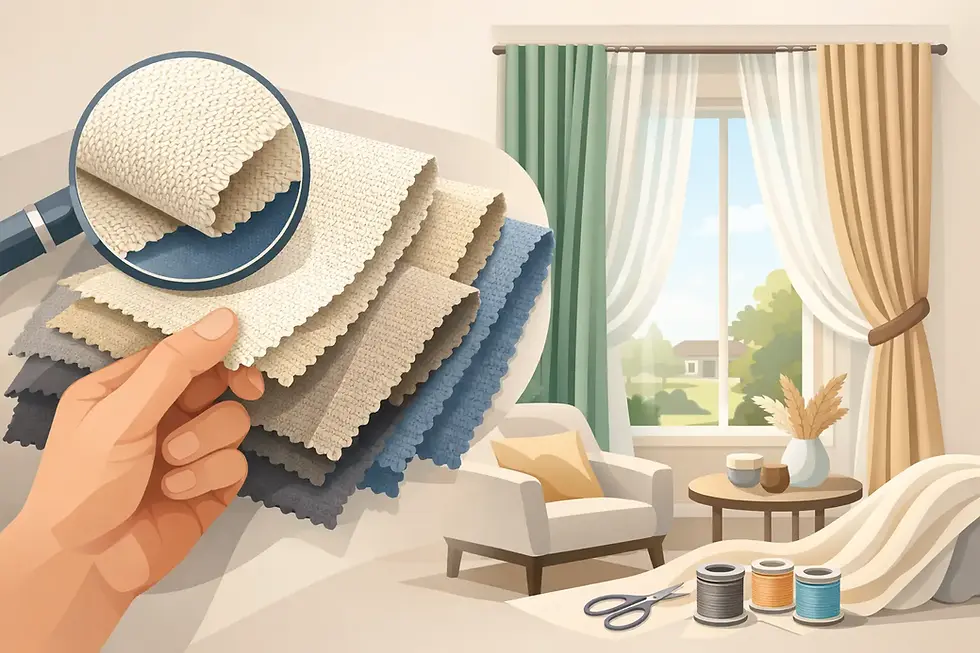
The most reliable signs of quality are visible and tactile. Look at the consistency of the weave, the depth of the colour, the handle of the cloth and the way it responds when gathered in your hand. A well-made furnishing fabric should feel purposeful rather than flimsy, with enough body to form graceful folds without looking stiff.
It is also worth looking at the reverse side. Patterned and woven fabrics should retain their character across the width, while printed designs should appear even and clear. Small irregularities can be part of the charm of natural fibres, especially linen, but they should feel inherent to the fabric rather than accidental flaws.
Weight and drape are different qualities
Fabric weight affects how curtains hang, but it is not the whole story. Some lightweight fabrics have a beautiful fluid drape, while certain thick materials can sit rather rigidly unless they are made and headed correctly. The aim is not necessarily a dramatic, heavy look. It is to achieve folds that feel generous, balanced and appropriate to the room.
Linen and linen blends bring relaxed texture and an effortless, tailored appearance. Cotton can feel fresh and versatile, particularly in informal spaces. Velvet offers richness, depth and a more enveloping finish, especially appealing in bedrooms, dining rooms and rooms used in the evening. Polyester blends can be exceptionally practical, with strong colour retention and easier care, but the finish should still feel refined rather than synthetic.
During an in-home consultation, seeing a larger fabric sample against your own walls and flooring is far more revealing than assessing it under showroom lighting. It allows you to see the true tone, texture and movement of the fabric where it will be used.
Curtain fabric quality review: look beyond the sample
A small cutting can make almost any fabric appear attractive. The more useful question is how it will perform over several metres of window, at full drop, with a heading and lining behind it. This is where professional guidance can save an expensive disappointment.
Consider scale first. A large print may look elegant on a sample but overwhelm a narrow window, while a fine design can disappear in a spacious room with tall ceilings. The repeat of a pattern also matters. Matching it across paired curtains requires extra fabric, and the finished design should meet neatly at the centre when the curtains are drawn.
Then consider how the cloth reacts to daylight. Pale fabrics can glow beautifully in an east- or south-facing room, though some may need lining to prevent them from looking too translucent. Darker fabrics often show their texture and folds more clearly, but they can absorb light in a smaller room. There is no universal right answer - a sun-filled lounge and a restful guest bedroom have different needs.
For clients who want a layered window treatment, a sheer voile paired with curtains can offer the best of both worlds. The voile softens daytime glare and brings privacy without closing off the view, while the curtain adds warmth, presence and privacy after dark. The quality of both fabrics matters, because their tones and textures need to sit comfortably together.
Why lining changes the finished result
Lining is often the quiet detail behind a polished curtain. It supports the face fabric, improves the way it hangs and gives windows a more considered appearance from outside. It can also protect decorative fabrics from intense sunlight, an important benefit in homes along the Costa del Sol.
Standard lining provides a little more body and privacy. A dimout lining is useful for bedrooms where reduced morning light is welcome, although it does not create complete darkness. For the strongest light control, blackout lining is the more suitable choice. It is particularly valuable in children’s rooms, guest rooms and properties used for holidays, where guests may be unused to early summer daylight.
There are trade-offs. A blackout-lined curtain may be less airy than an unlined linen, and a very thick interlining can be unsuitable for a minimal, contemporary scheme. Yet in the right room, interlining brings a luxurious fullness and can help curtains feel warmer and more substantial. The best choice is the one that supports both the fabric and the way you live.
Sunlight, fading and fibre choice
No decorative fabric is completely immune to prolonged direct sun. Natural fibres, richly dyed colours and delicate prints can all change gradually when exposed to strong UV light. This does not mean they should be avoided. It means they should be selected with their setting in mind and, where appropriate, protected with lining or a separate sheer layer.
If a window receives intense afternoon sun, a lighter-toned, lined fabric may give better long-term satisfaction than an unlined deep colour. If you love the depth of velvet, positioning it behind a voile or choosing a quality lining can help preserve its appearance. A considered fabric selection is never only about the first day of installation; it is about how the room will look after many bright seasons.
Craftsmanship makes fabric look its best
Even a beautiful cloth can lose its impact if it is poorly measured, skimps on fullness or is fitted without care. Made-to-measure curtains allow the fabric to be proportioned properly for the window, with enough width for elegant gathering and a hem that sits precisely above the floor or gently breaks according to the desired style.
Heading choice also affects the fabric’s personality. Wave curtains suit contemporary rooms and wide runs of glazing, creating calm, uniform ripples. Pencil pleats are versatile and timeless. Hand-finished pinch pleats offer a more tailored, classic presence and showcase fabrics with body or pattern particularly well. The heading should support the cloth rather than compete with it.
At Boutique Curtains, we see the strongest results when fabric, lining, track or pole, heading and installation are considered as one complete design. Measuring in the home means practical details such as radiators, opening doors, ceiling height and the direction of the light can be addressed before the fabric is ordered.
Choosing well for each room
In a living room, the focus is often on softening light while retaining an open, welcoming feeling. Textured linens, understated woven fabrics and layered voiles tend to work beautifully here. For bedrooms, privacy, comfort and light control are usually more important, making lined curtains and fuller fabrics particularly appealing.
Dining rooms can carry more decorative drama, whether that means a graceful print, a tailored stripe or the subtle sheen of a quality velvet. In kitchens and informal breakfast areas, practicality matters alongside style. A fabric that is easy to care for and positioned safely away from heat and splashes will offer a better everyday experience.
Second homes benefit from the same careful approach. Choose materials that suit how the property is used, how often it is occupied and how much direct light each room receives. Elegance should feel effortless, not fragile.
The finest curtain fabric is the one that looks at home in your space: beautiful in the changing light, satisfying to touch and expertly made for the windows you see every day. Taking time to assess it in your own room turns a fabric choice into a lasting part of the home.


Comments